
Dark Social: The Hidden Conversations Shaping B2B Buying Decisions

Not every buyer journey starts with a neat click.
Often, it starts in WhatsApp groups, private Slack channels, or even a quick “have you heard about these guys?” message between colleagues.
This is what is known as dark social: a hidden, hard-to-track buyers’ funnel built on long-term trust and business credibility.
In this article, we dive into what exactly that means, why it matters for marketers, and how you can tweak your content strategy to ensure your brand remains relevant.
What Exactly is Dark Social?
Dark social is a simple term used by marketers to describe website traffic, brand discovery, and buying influence that comes from channels that are difficult to track accurately.
It refers to the hidden, hard-to-track channels where sharing and conversations happen.
These are places where B2B buyers are very active, but standard analytics tools can’t accurately attribute traffic sources.
Think of the conversations and content shares happening on platforms like WhatsApp chats, private Slack groups, Discord servers and other niche peer networks. A buyer might hear about your brand in one of these spaces, Google you later, and arrive on your website as “direct traffic”.
The dark social funnel is often broader and focuses on the unseen buying journey, including intent signals, research, conversations, and influence that happens before someone fills in a form.
You may not be able to track dark social neatly, but it’s still crucial for shaping awareness and building B2B credibility.
Why Dark Social Matters for Marketers
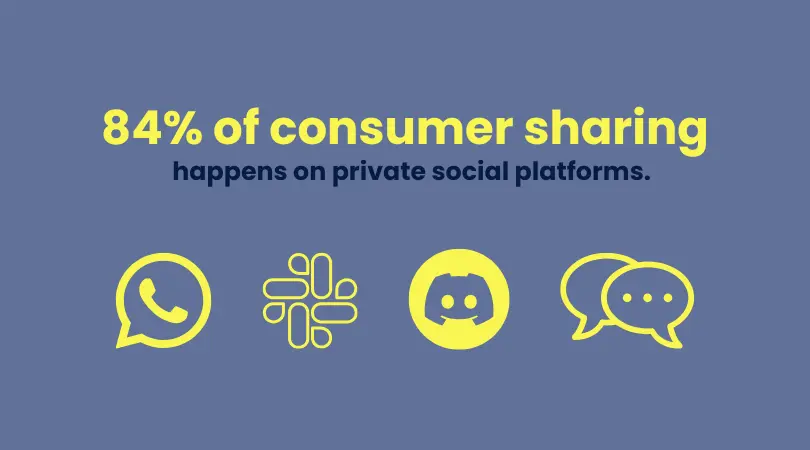
Dark social matters because it shows us people don’t always discover brands or make decisions on public platforms alone.
In fact, 84% of consumers’ outbound sharing occurs via private channels such as email, social networks, and messaging. That means a huge brand of discovery is happening in spaces your analytics tools can’t always track.
For marketers, this creates a bit of a measurement headache. A potential customer might see your LinkedIn post, receive your blog in a WhatsApp message, or hear your company mentioned in a podcast before visiting your website by typing your URL directly into Google.
Analytics may call it direct traffic, and your sales team may say the lead came out of nowhere, but in reality, it has just been warming up in the background.
This is especially important in B2B marketing, where buying decisions are rarely one easily trackable journey. Instead, people ask friends for recommendations, screenshot posts, forward emails, or discuss suppliers long before filling in a contact form.
For businesses, this means your content needs to do more than chase clicks. It also needs to be useful and credible enough to share and remember when someone asks for recommendations.
That’s where smarter, harder-working merchandising comes in. Dark social pushes marketers to focus on the bigger picture: building awareness and earning trust to give buyers the confidence to choose your brand when the time is right.
How You Can Track and Utilise Dark Social
UTM parameters
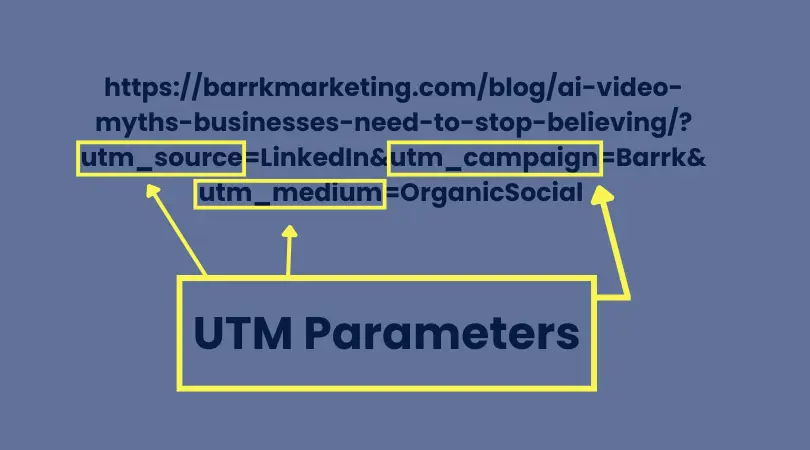
UTM parameters are one of the simplest ways to improve your tracking. These are essential small tags added to the end of a URL to show where a visitor came from.
For example, if you share a blog post on LinkedIn, in your newsletter, and in a partner email, each link can have its own UTM. This can help you see which channels are driving traffic.
It’s important to note that UTMs won’t capture every dark social interaction, especially if someone copies and pastes the link into a private chat.
However, they do help you clean up your data and reduce the amount of traffic that gets dumped into the “direct” group.
URL shorteners
URL shorteners can help you track how links are being shared and clicked. Tools like Bitly allow you to create shorter, cleaner URLs while still collecting data.
This can be especially useful for things like podcasts, PDFs, events, social posts, or community sharing, where long links can look messy or be harder to remember.
URL shortening isn’t a perfect metric tracker, but it does give you another layer of visibility. It also looks better than a long URL, which can make it feel less intimidating to click on.
Direct traffic spikes
Direct traffic is often where dark social hides. When someone visits your website by typing in your URL or clicking from an untracked source, analytics tools may record it as direct traffic.
That’s why it’s worth looking for spikes. While they may not give you perfect attribution, these spikes can provide useful insights.
Customer surveys
Sometimes the simplest tracking tool is often the most overlooked: just ask.
Add a “How did you hear about us?” field to your contact forms. Keep it open-ended where possible, rather than forcing people to choose from a dropdown of neat little boxes that don’t reflect real life.
This kind of self-reported attribution gives you context that analytics tools often miss. It helps you understand what is actually creating trust, awareness, and demand.
Use data insights
Tracking dark social is only useful if you do something with what you learn.
For example, if customers keep mentioning LinkedIn, invest more in thought leadership. Or if referrals are coming from niche communities, create content that answers the questions being asked there.
Dark social should influence your content strategy and campaign planning to help customers choose your brand with confidence.
Streamline Your Marketing Strategy with Barrk
Dark social may be difficult to track, but it’s too important to ignore. For businesses that rely on strong relationships and quality leads, the hidden influence of dark social matters.
When you partner with Barrk, you’re taking the first step towards making sense of dark social.
As your outsourced marketing partner, we help you create smarter, harder-working content that builds visibility, earns trust, and gives your potential clients more confidence in choosing you.
Reach out to us today to see how we can help!